Blog · Guide
Lebanese Arabic vs Standard Arabic (MSA): which to learn?
There's no 'single Arabic'. There's a written language (Fusha / MSA) and dozens of spoken dialects. The right choice depends on what you want to do with the language — travel, family, work, academic study, or music and series.
 Ibra · Published on 15 July 2026 · About 7 min read
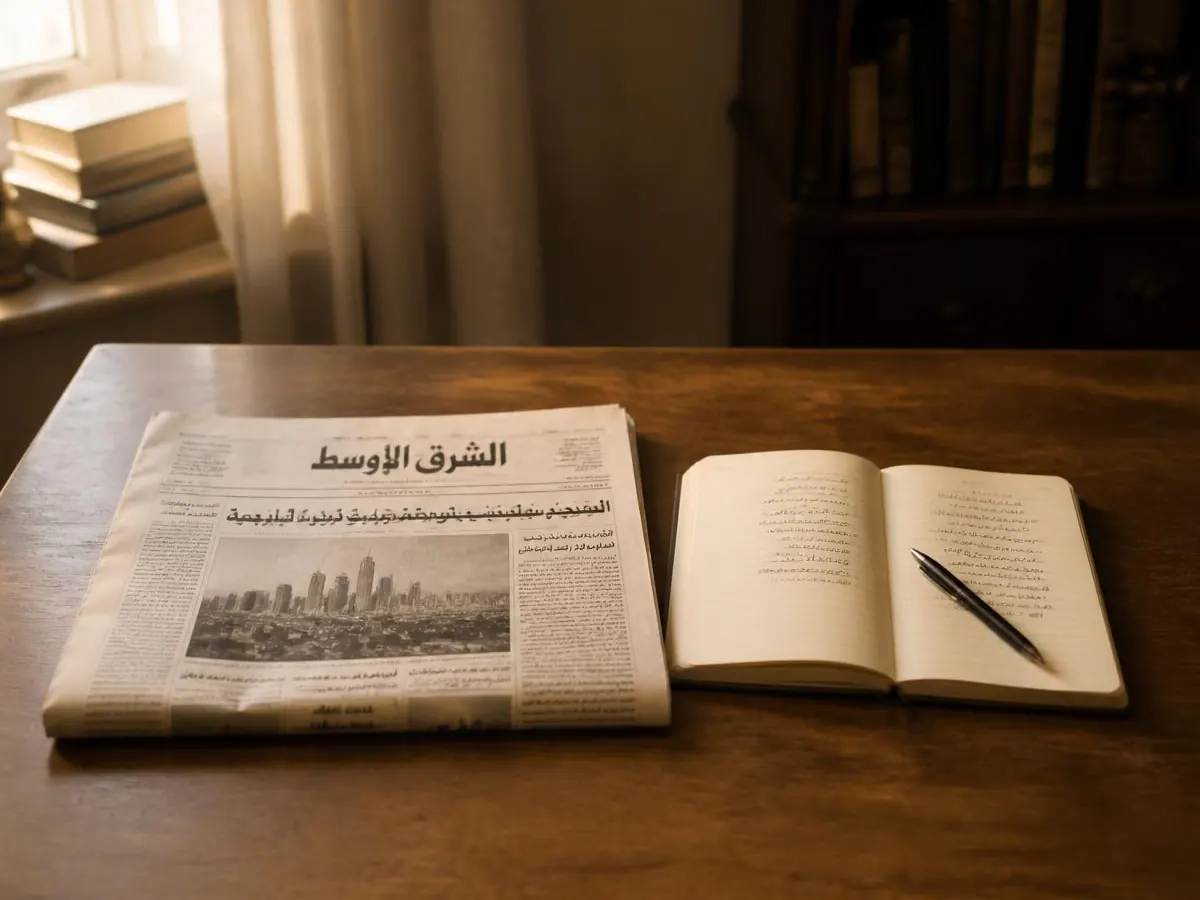
1. What Standard Arabic (MSA / Fusha) is and what Lebanese is
Modern Standard Arabic (MSA, or 'Fusha' in Arabic) is the written, official form of the language, used across the Arab world in news, newspapers, books, legal documents and religious sermons. It's a learned language — no one speaks it natively at home.
Lebanese Arabic is the dialect spoken daily in Lebanon (part of the Levantine family, together with Syrian, Jordanian and Palestinian Arabic). It's the language of family, friends, music and series — but is almost never written in its pure form.
The difference isn't like 'literary English' versus 'spoken English': it's closer to the difference between Latin and Italian — two related registers, but with distinct vocabulary, grammar and pronunciation.
2. Practical uses: when to use each
Choose Lebanese if you want to:
- talk with Lebanese family, a partner or friends;
- travel to Lebanon, Syria, Jordan or Palestine;
- understand music (Fairuz, Nancy Ajram, Mashrou' Leila) and popular series;
- use the language on TikTok, Instagram or in informal conversations;
- reach real conversations in months, not years.
Choose Fusha (MSA) if you want to:
- read newspapers, books or religious texts;
- pursue academic studies or work in diplomacy / official translation;
- follow news broadcasts (Al Jazeera, BBC Arabic);
- have a solid base for later understanding other dialects in writing.
In practice, most adults learning Arabic for real communication start with a dialect — and add Fusha later, if needed.
3. Which is harder to learn?
Both share challenges for an English speaker: the 'hard' sounds (ع, ح, ق), right-to-left writing and a vocabulary with no common roots to European languages.
Beyond that, Fusha is significantly harder for a beginner:
- Grammatical cases (nominative, accusative, genitive) marked with endings — Lebanese doesn't use them.
- Dual conjugations and more complex verb forms; Lebanese has a regularised system, closer to everyday speech.
- Formal vocabulary, heard far less often — hard to retain without constant exposure.
With 2–3 hours of study a week, a beginner can hold simple conversations in Lebanese in 4–6 months. The same 'conversational' level in Fusha usually takes 2–3 times longer, because Fusha isn't used in conversation — so real practice is missing.
4. Cultural context: why Lebanese is 'media-friendly'
For decades, Lebanon has produced an enormous amount of cultural content in dialect — from the music of Fairuz and the Rahbani brothers, to soap operas broadcast across the Arab world and TikTok and YouTube creators. The Lebanese dialect is widely understood across the region, even by Egyptian or Gulf Arabic speakers.
Modern Lebanese also carries strong influences from French, English, Aramaic and Turkish, and in Beirut you routinely hear sentences like „Hi, kifak? Ça va?”. It's a language with personality — and a window into a living culture, not just written texts.
5. Quick comparison table
| Criterion | Lebanese (dialect) | Fusha / MSA |
|---|---|---|
| Used for | Daily conversation, family, travel, media | Writing, news, official texts, religion |
| Who speaks it natively | ~30M speakers (Lebanon, Syria, Jordan, Palestine) | No one as a mother tongue |
| Grammar | Simplified, no cases | Complex, with cases and dual forms |
| Time to conversation | ~4–6 months | ~12–18 months (and rarely used in speech) |
| Writing | Rare; often in Latin transliteration | Standard, in the Arabic alphabet |
| Ideal for | Communication, culture, family | Academic study, reading, formal contexts |
Want to hear how it sounds?
30 minutes with a native teacher, free — online or in person in Bucharest.
Book the trial lesson6. What should you choose?
A practical rule for adults who want to learn Arabic:
- You want to speak — with family, on holiday, on social media, at work with Lebanese clients → start with Lebanese Arabic. Progress shows within weeks.
- You want to read and write — for academic study, the Quran, newspapers, official contexts → start with Fusha (MSA).
- You want both — start with Lebanese (fast results, motivation), and add Fusha after 6–12 months once the phonetic and vocabulary base is formed.
At the Lebanese Arabic Center with Ibra we teach the Lebanese dialect directly, with a native teacher, for adults and children — in person in Bucharest or online. We usually add Fusha later, and only if the whole group wants it — or the student, in private lessons.
Concrete steps:
- Take the free level test to find where you start.
- See the group courses (structured on CEFR levels A1–C2) or private lessons (personalised pace).
- For kids, we have a dedicated programme in person in Bucharest.
- See also the article How to learn Lebanese Arabic in 2026 for a step-by-step guide.
Frequently asked questions
If I learn Lebanese, will I understand the news in Arabic?
Partly. News bulletins are in Modern Standard Arabic, which has different formal vocabulary and endings. Lebanese gives you conversation; for press and documents you need MSA, added later.
Can an MSA speaker get by in Beirut?
They will be understood, but they will sound formal — rather like someone speaking the Romanian of official documents. The other direction is harder: everyday conversation does not resemble the textbook.
Can I learn both in parallel?
You can, but early on it slows progress, because the two forms use different words for the same things. Most learners advance faster by settling the dialect first.
Read next
Not sure which to choose? Start with a free test.
We'll recommend the right level and format — Lebanese, Fusha or the combination that fits your goals.
Take the level test