The Syriac inside Lebanese Arabic: words, months, villages
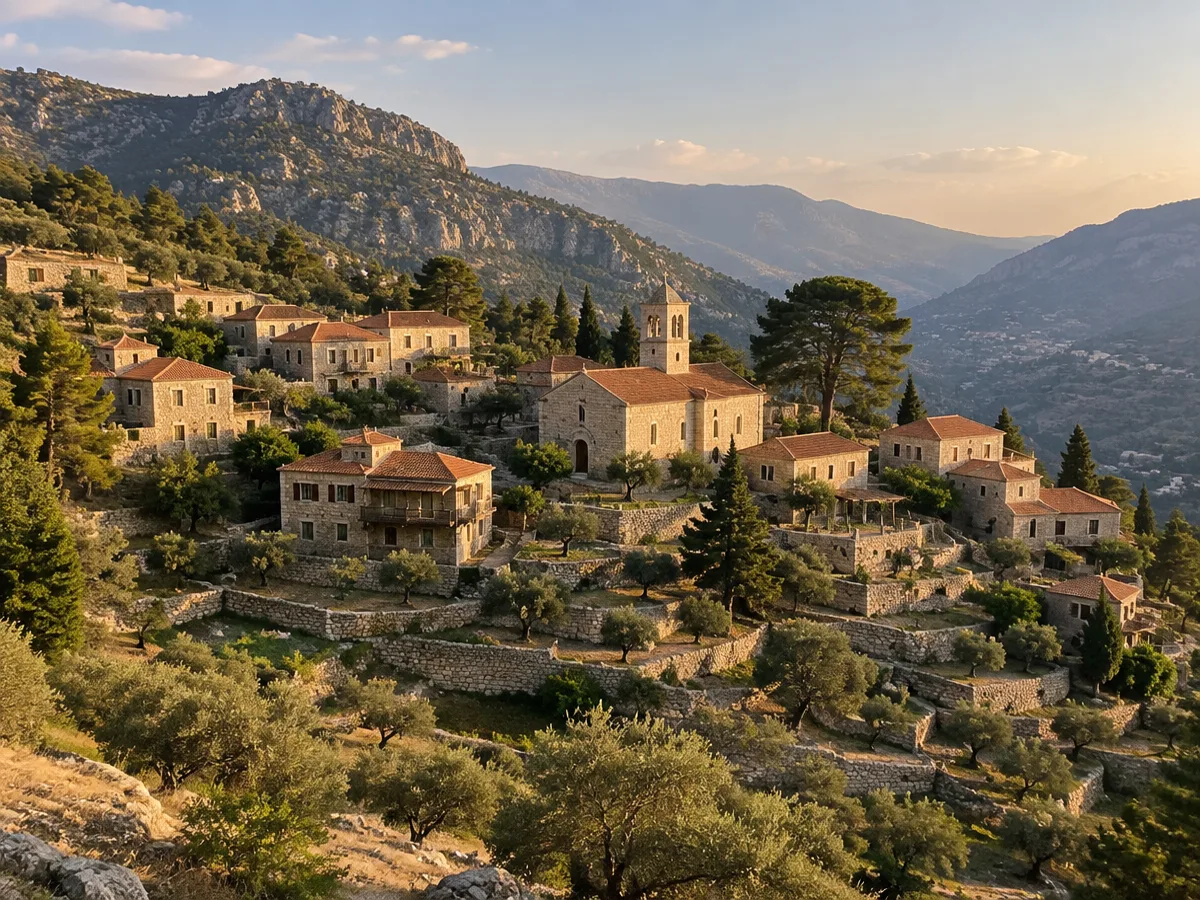
Arabic did not arrive in an empty place. For centuries the people of Lebanon spoke Aramaic, and Christians wrote it in its Syriac form. When Arabic became the everyday language, the old one did not simply vanish: it melted into it. You still hear it today, in small words, in the names of the months and on village signs.
Published on 4 October 2026 · About 6 min read
1. Aramaic, Syriac and Lebanon
From the first millennium BC, Aramaic spread across the Near East until it became the common language of trade and administration, including in the Persian Empire. It was the language Jesus spoke. Syriac is the Aramaic of Edessa, which from the first centuries AD became the written and church language of Eastern Christians — among them the Maronites of Mount Lebanon.
After the 7th century, Arabic slowly became the everyday language. Slowly is the key word: in the mountain villages, the change took centuries, and the old language left its marks behind.
2. Words you use without knowing
- ēmta — "when?" (Standard Arabic says matā).
- jawwa / barra — "inside / outside" (Standard Arabic: dākhil / khārij).
- nāṭūr — "guard, watchman", from Aramaic nāṭōrā.
- Mār — "saint" (literally "lord"), in Mār Elias, Mār Charbel, Mār Mikhāyel.
Grammar kept a habit too. Lebanese often announces the object with a pronoun and then names it with la-: shefto la-Elie — literally "I saw him, Elie". Linguists often point to the same construction in Aramaic.
3. The months of the year
In Lebanon, Syria, Jordan and Palestine, the months are not called Yanāyir or Fibrāyir as in Egypt or North Africa. They keep their old Aramaic names:
- January — Kānūn t-tēne · February — Shbāṭ · March — Ādār
- April — Nīsān · May — Ayyār · June — Ḥzayrān
- July — Tammūz · August — Āb · September — Aylūl
- October — Tishrīn l-awwal · November — Tishrīn t-tēne · December — Kānūn l-awwal
4. Village names
Many place names in Mount Lebanon are Syriac and describe the land or what stood there. Two prefixes are everywhere: B-, from bēt ("house"), as in Bikfaya, Baskinta, Bkerke; and Kfar ("village"), as in Kfardebian or Kfarshima.
Some names come with stories. A popular explanation reads Bsharri as "house of God" — a legend, but a fitting one for the town that guards Arz er-Rab (أرز الرب), the Cedars of God. Brummana is often explained as "house of Rammān", the ancient storm god.
Want to hear Lebanese the way it lives?
We teach the Lebanese dialect with a native teacher. Groups A1–C2 and 1-on-1 lessons.
See the coursesRelated: The Phoenicians and Lebanese identity · Garshuni and the Qozhaya press · Languages of Lebanon.
Frequently asked questions
Does anyone still speak Syriac in Lebanon?
Not as an everyday language. Syriac remains the liturgical language of the Maronite Church and other Syriac churches, so it is heard in church, in prayers and in hymns.
Are Aramaic and Syriac the same language?
Syriac is a form of Aramaic: the dialect of the city of Edessa (Urfa, in today's Turkey), which became the written language of Eastern Christianity.
Do I need Syriac to learn Lebanese Arabic?
No. Words of Syriac origin are simply Lebanese words — you learn them with everything else. It is just a good story about where they come from.
Read next
Ready to start speaking Lebanese Arabic?
A free trial lesson with a native teacher — online or in person in Bucharest.
Book a free trial lesson