Blog · Culture
Lebanese culture: customs, food and traditions
Hospitality, mezze, music and a unique mix of influences — the living context that gives meaning to the language you're learning.
 Ibra · Published on 16 July 2026 · About 6 min read
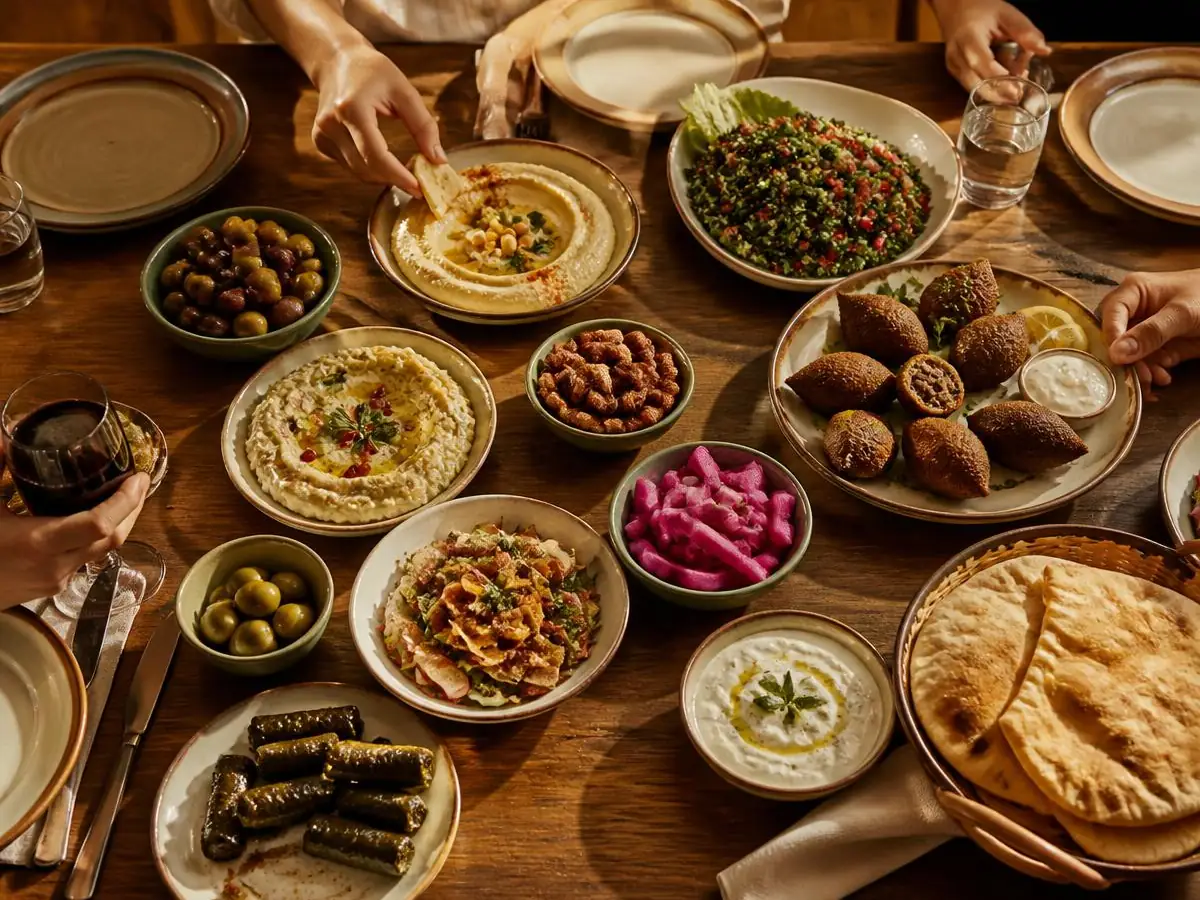
You don't just learn a language — you step into a culture. Lebanon is a small Mediterranean country, but with enormous cultural density: a meeting point between East and West, with thousands of years of history. Here's what gives Lebanese culture its charm.
Hospitality, above all
In Lebanon, the guest is sacred. You'll always be welcomed with „Ahla w sahla” (welcome) and, almost certainly, a coffee or something to eat. Refusing is nearly impossible — and you won't want to. That warmth is felt directly in the language, full of terms of affection (remember „ta2burni”?).
The food: mezze and much more
Lebanese cuisine is famous worldwide. A meal begins with mezze — many small plates you share with everyone:
- Hummus and moutabbal — chickpea and aubergine dips.
- Tabbouleh — a fresh salad of parsley, tomatoes and bulgur.
- Kibbeh — bulgur-and-meat croquettes, a national symbol.
- Falafel, fattoush, manakish — and the list goes on.
Food isn't just nourishment — it's a way of being together. Many expressions you learn in class come up exactly at the table, around the mezze.
Music, language and a unique blend
Lebanese music ranges from the great Fairuz (the voice of Lebanese mornings) to modern Beirut pop. One thing will surprise you: Lebanese people often mix Arabic, French and English in the same sentence — „Hi, kifak? Ça va?”. It reflects the country's cosmopolitan history.
Want to hear how it sounds?
30 minutes with a native teacher, free — online or in person in Bucharest.
Book the trial lessonWhy culture matters when learning the language
Lebanese Arabic is a living dialect, not the classical Arabic of textbooks. Words carry story, humour and context. When you learn with a native teacher, you get the culture along with the language — that's why our courses include real expressions, customs and the authentic way people speak on the streets of Beirut.
Curious? Start with a free trial lesson or see all the courses.
Frequently asked questions
What does mezze mean?
A meal made of many small plates, placed in the middle and shared by everyone. It is not a starter before a main course — it is the format of the meal itself, and the reason Lebanese meals last for hours.
Why is hospitality pushed so insistently?
Offering food and insisting is the normal form of respect, not pressure. A polite refusal is usually repeated two or three times before it is taken seriously — it is part of the ritual of conversation.
How does cultural context help with learning the language?
Many Lebanese expressions do not translate literally; they are explained by the situation they are used in — at the table, when parting, at good news or bad. Once you know the context, the phrase sticks by itself.
Read next
Ready to start speaking Lebanese Arabic?
A free trial lesson with a native teacher — online or in person in Bucharest.
Book a free trial lesson