Blog · Beginners
How to greet in Lebanese Arabic: mar7aba, kifak, yalla bye
From 'mar7aba' to 'yalla bye' — the greetings you hear daily in Lebanon, with pronunciation and context.
 Ibra · Published on 16 July 2026 · About 4 min read
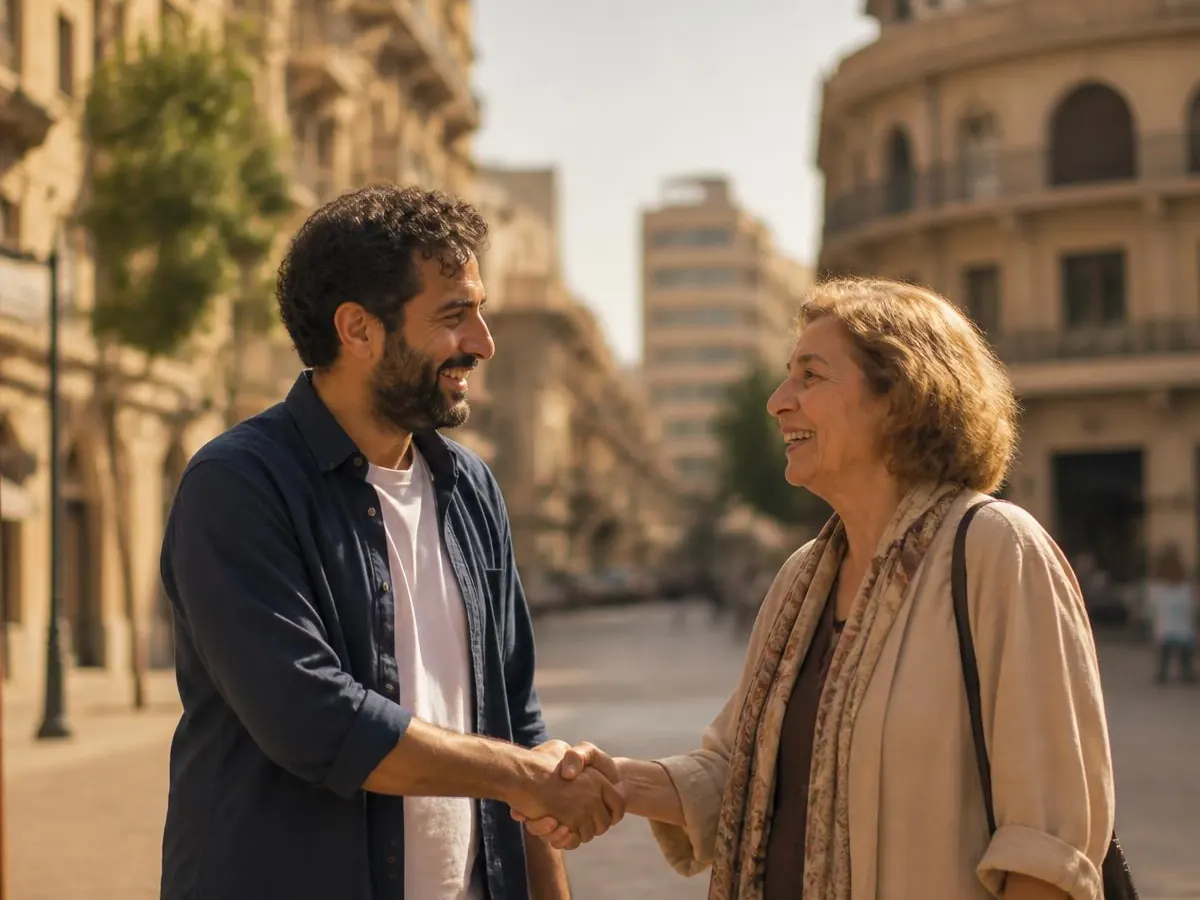
Greetings are your first interaction in any language — and in Lebanese they're warm and expressive. The good news: a handful of phrases take you a long way. Here are the most common ones, with Arabizi pronunciation and Arabic script.
The essential phrases
| Arabizi | Arabic | When / meaning |
|---|---|---|
| Mar7aba | مرحبا | Hi / Hello (universal, any time) |
| Ahla w sahla | أهلا وسهلا | Welcome |
| Saba7 el kheir | صباح الخير | Good morning |
| Saba7 el noor | صباح النور | Reply to 'good morning' |
| Masa el kheir | مساء الخير | Good evening |
| Kifak? (m) / Kifik? (f) | كيفك؟ | How are you? |
| Mnee7, il7amdillah | منيح، الحمد لله | Good, thank God |
| Yalla bye | يلا باي | Bye (informal, very common) |
| Bshoufak (m) / Bshoufik (f) | بشوفك | See you / Soon |
Masculine or feminine — mind the ending
Notice 'Kifak?' vs 'Kifik?'. In Lebanese, when you address someone the form changes with their gender: -ak for men, -ik for women. It's a simple rule that shows up everywhere and you pick it up quickly by speaking.
'7' and 'kh' — how to pronounce them
In 'saba7' and 'el kheir' there are guttural sounds specific to Arabic. The number 7 is a strong 'h' from the throat, and 'kh' is like the 'ch' in German 'Bach'. Don't worry if they don't come out at first — in a lesson you hear them from a native speaker and repeat them on the spot.
Want to hear how it sounds?
30 minutes with a native teacher, free — online or in person in Bucharest.
Book the trial lessonPractise with a real person
Greetings are learned best by saying them, not reading them. In a free trial lesson you pronounce them with the teacher and start a first short conversation. See also the first 20 Lebanese phrases to continue.
Frequently asked questions
What is the difference between "kifak" and "kifik"?
The ending changes according to who you are addressing: "kifak" to a man, "kifik" to a woman. The same logic shows up in many other words, so it is worth learning from the start.
Are religious phrases used in everyday greetings?
Some expressions have religious origins but are used by everyone as ordinary social formulas, whatever their faith. "Mar7aba" remains the most neutral option and fits any context.
Why do Lebanese people say "yalla bye"?
Because mixing languages is normal in Lebanon: "yalla" is Arabic, "bye" is English, and together they have become the standard way to end a conversation, especially on the phone.
Read next
Ready to start speaking Lebanese Arabic?
A free trial lesson with a native teacher — online or in person in Bucharest.
Book a free trial lesson