Blog · Vocabulary
Family vocabulary in Lebanese Arabic (core, extended, in-laws)
Family is the first real conversation topic in any language. In Lebanese it matters even more — and the distinction between maternal and paternal relatives is central.
 Ibra · Published on 24 July 2026 · About 6 min read
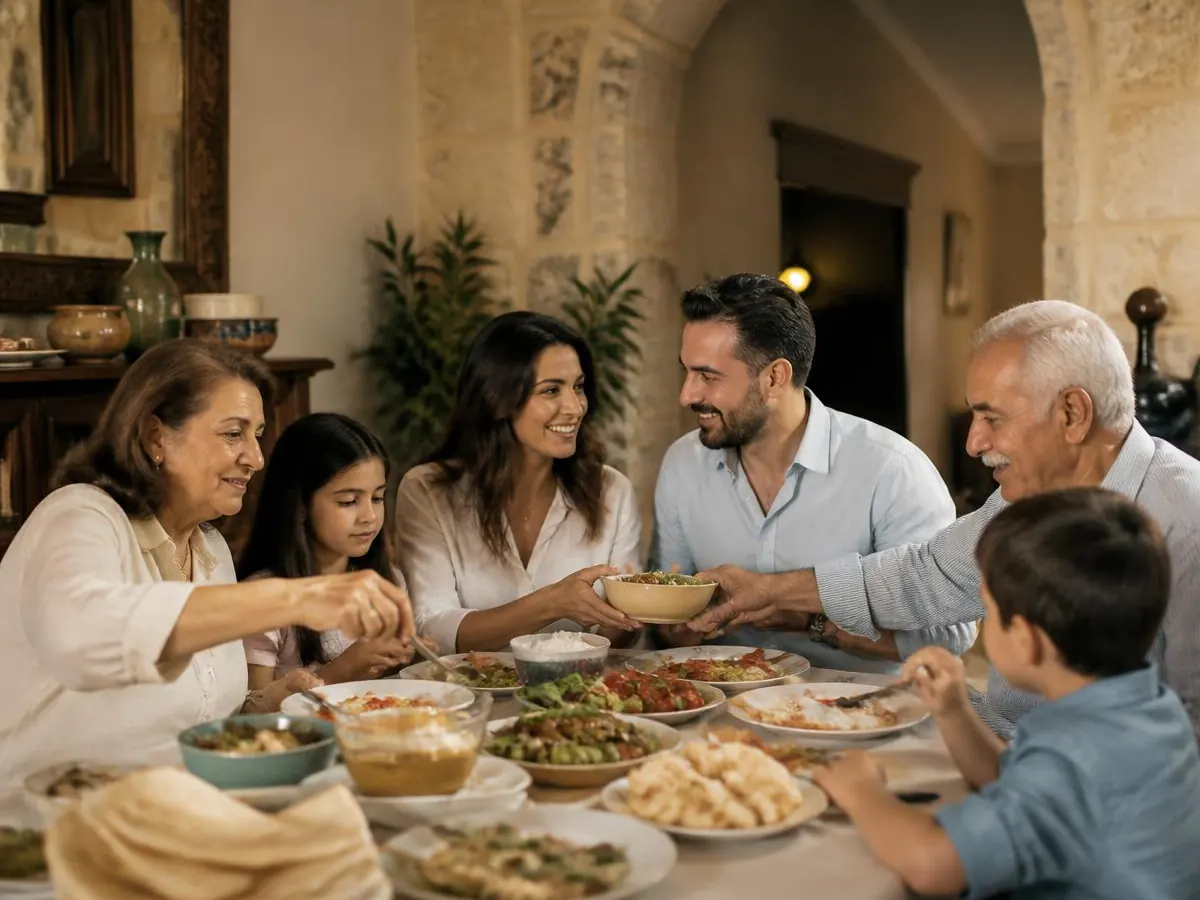
One thing that surprises most learners: Lebanese Arabic distinguishes maternal from paternal uncles and aunts. 3ammi is your dad's brother; 5ali is your mum's brother. There's no single word for ‘uncle’ — you always specify the side.
Core family
| Arabizi | عربي | English |
|---|---|---|
| eyle | عيلة | family |
| bayy / baba | بيّ / بابا | father / dad |
| em / mama | إم / ماما | mother / mum |
| akh | أخ | brother |
| ekht | أخت | sister |
| jeddi / jiddo | جدّي / جدّو | my grandfather / grandpa! (when you call him) |
| teta / sitte | تيتا / ستّي | grandma / my grandmother (lit. "my lady") |
| 3ammi | عمّي | my paternal uncle |
| 3ammti | عمّتي | my paternal aunt |
| 5ali | خالي | my maternal uncle |
| 5alti | خالتي | my maternal aunt |
| ibn 3ammi | ابن عمّي | my (paternal) cousin — m |
| bint 3ammi | بنت عمّي | my (paternal) cousin — f |
Spouses, in-laws, grandchildren
| Arabizi | عربي | English |
|---|---|---|
| jouz / mart | جوز / مرت | husband / wife |
| 3aris / 3aroos | عريس / عروس | groom / bride |
| 7amii / 7ameeti | حماي / حماتي | my father/mother in-law |
| sihri | صهري | my brother-in-law |
| silfeti | سلفتي | my sister-in-law |
| ibni / binti | ابني / بنتي | my son / daughter |
| jeddi / sitte | جدّي / ستّي | my grandpa / grandma |
| 7afeed / 7afeede | حفيد / حفيدة | grandson / granddaughter |
Possessive endings — ‘my/your/his…’
| Arabizi | عربي | English |
|---|---|---|
| bayyi | بيّي | my dad |
| bayyak / bayyik | بيّك | your dad (m/f) |
| bayyo | بيّو | his dad |
| bayya | بيّا | her dad |
| bayyna | بيّنا | our dad |
| bayykon | بيّكن | your (pl) dad |
| bayyon | بيّن | their dad |
Useful family sentences
- هيدي إمّي— This is my mother — hayde emmi.
- أخي عايش ببيروت— My brother lives in Beirut — akhi 3aayesh bi Bayrout.
- عندي أختين— I have two sisters — 3andi ekhtayn.
- ستّي لبنانية— My grandma is Lebanese — sitte Lebnaniyye.
- سلّم ع عيلتك— Say hi to your family — sallem 3a eyltak.
Vocabulary for your family, not a textbook
In 1-on-1 lessons the material is shaped around your actual relatives and situations.
See private lessonsCultural notes
- Family greetings matter: after ‘kifak?’ (how are you), the next question is almost always ‘kif el eyle?’ (how's the family?).
- Elders are addressed with ‘3ammo’ / ‘khalto’ (uncle/aunt) even when unrelated — it's a sign of respect.
- The word ‘eyle’ (family) usually means the extended family, not just the nuclear one.
Family vocabulary is the one area where a generic word list rarely fits: what you need depends on who your relatives actually are. In one-on-one lessons the material is built around your own family — and around the situations you will actually be in.
Related: 35+ daily-life phrases · Lebanese culture guide.
Frequently asked questions
Why does Lebanese have different words for a maternal and a paternal uncle?
Because the two sides of the family have distinct social roles, and the language marks them explicitly. It is not a subtlety: they are entirely different words that everyone uses.
How do I politely address my partner's parents?
There are dedicated terms for parents-in-law, different from those for your own parents. Using them correctly at a first meeting is noticed immediately and counts for far more than fluency.
Are the same words used for close and distant relatives?
Not quite. Family terms are often extended to close friends and neighbours as a mark of affection — someone can be called "uncle" with no blood relation at all.
Read next
Ready to start speaking Lebanese Arabic?
A free trial lesson with a native teacher — online or in person in Bucharest.
Book a free trial lesson