Garshuni and the Qozhaya printing press
For centuries the Christians of Lebanon spoke Arabic but wrote it with the letters of the old language, Syriac. This writing is called Garshuni — and in a monastery in the Qadisha valley, in 1610, it was printed.
Published on 4 October 2026 · About 5 min read
1. Arabic in Syriac letters
When Arabic became the everyday language of Lebanon, the Maronites and other Syriac Christians kept learning to read in Syriac, the language of their liturgy. So they wrote the new language with the alphabet they already knew. Letters, notes, prayers and even whole books were written this way: the words are Arabic, the script is Syriac.
Garshuni is a snapshot of how the Arabization happened: not a break, but a slow overlap, in which the old language survived in the hand that wrote the new one.
2. Rome and the Maronite College
In 1584 the Maronite College opened in Rome, training priests from Mount Lebanon. Europe had been printing books for over a century, and Syriac type was cast there. Maronite scholars brought this knowledge home.
3. The 1610 Psalter
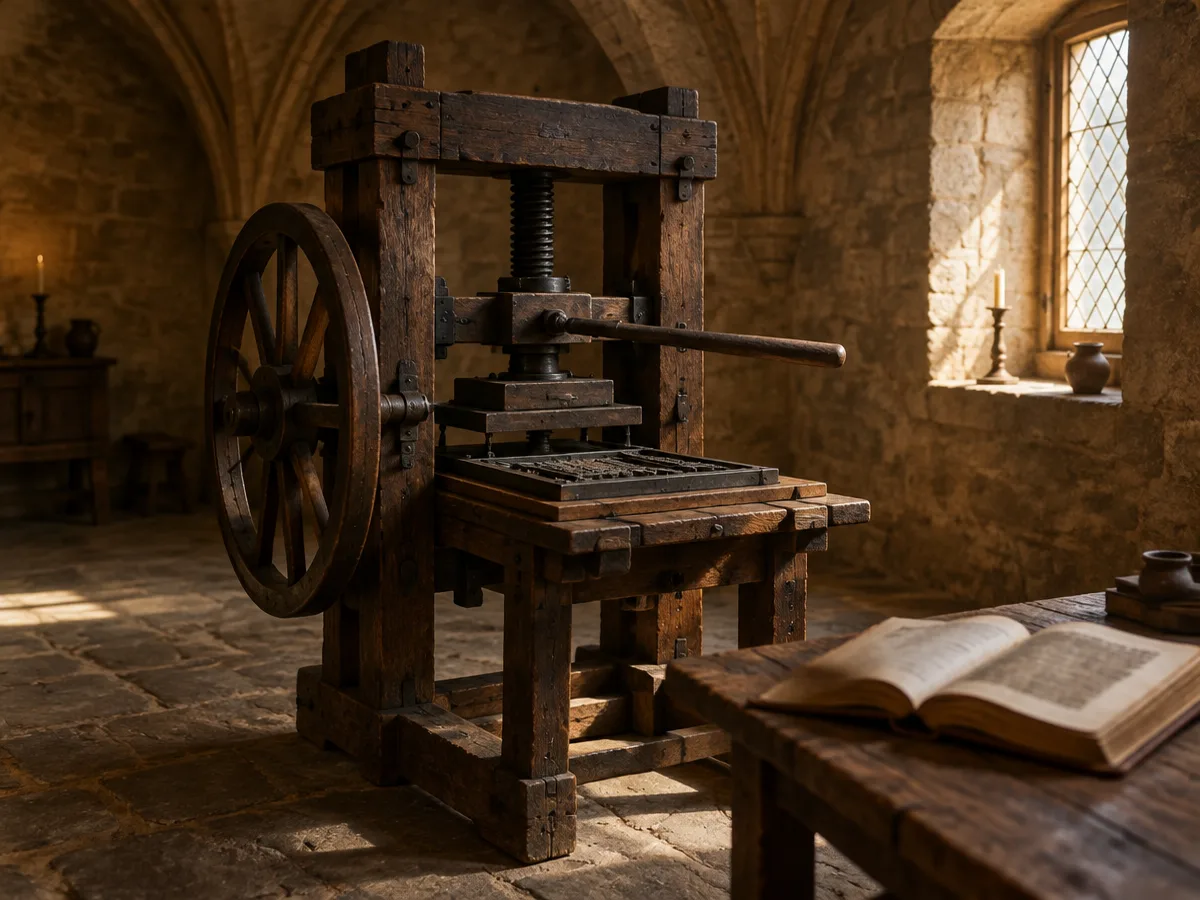
In 1610, at the Monastery of Saint Anthony of Qozhaya in the Qadisha valley, a press printed the Book of Psalms in two columns: Syriac on one side, Arabic in Garshuni on the other. It was the first book printed in Lebanon.
Was it the first press in the Middle East? It is often called the first in the Arab world. The Ottoman Empire had earlier presses — in Constantinople at the end of the 15th century and in Safed in 1577 — but they printed Hebrew. The first Ottoman press printing in Arabic letters was only approved in 1727, more than a century after Qozhaya.
4. Why it still matters
Garshuni and the Qozhaya press tell the same story as the Syriac words in Lebanese Arabic: Lebanon took Arabic as its language without letting go of where it came from. You hear both sides of that story every time a Lebanese person says ēmta instead of matā.
Want to read and speak Lebanese?
We teach the Lebanese dialect with a native teacher. Groups A1–C2 and 1-on-1 lessons.
See the coursesRelated: The Syriac inside Lebanese Arabic · Saint Ephrem and the Maronite Church · The Arabic alphabet.
Frequently asked questions
What does Garshuni mean?
It is the name for Arabic written in Syriac letters. The origin of the word is uncertain; for the Maronites it was simply the natural way to write Arabic with the letters they knew from church.
Where is Qozhaya?
The Monastery of Saint Anthony of Qozhaya is in the Qadisha valley in northern Lebanon, not far from Bsharri and the Cedars of God.
Was it the first printing press in the Middle East?
It depends on what you count. It was the first in Lebanon and is often called the first in the Arab world. The Ottoman Empire had older presses, but they printed Hebrew; the first Ottoman press in Arabic letters was only approved in 1727.
Read next
Ready to start speaking Lebanese Arabic?
A free trial lesson with a native teacher — online or in person in Bucharest.
Book a free trial lesson